Wednesday, November 16

Book Review: Nam-A-Rama by Phillip Jennings

Author: Phillip Jennings
Title: Nam-A-Rama
Genre: Historical Fiction & Humor
Pages: 332
First Published: March 2003
Where I Got It: My Shelf (an Xmas or bday gift a million years ago...)

It starts and ends, like all the best adventures, in the air. Almost-Captain Gearheardt and his buddy, Almost-Captain Armstrong, are ferrying bodies (live in, dead out) for the CIA's Air America, but they have never forgotten their TOP SECRET orders, given when Gearheardt was delivering pizzas to the Oval Office for the CIA: Chopper into Hanoi and buy Uncle Ho a beer. Then either shoot his ass or shake his hand (the instructions get vague at this point). 

And so they do, Semper Fi, pausing only to get an aircraft carrier black-flagged for bubonic plague, have an affair with Mickey Mouse, cleverly decode the message sewn into a lusty spy's black panties, commandeer a Russian truck complete with a midget Chinese 'Uncle Sam,' avenge themselves on a Cuban torturer, and dutifully experience all the Honor and Glory of the next-to-the-next-to-last war that never (God forbid) made the Nightly News.

And they do it all for laughs. Because if they were to stop laughing, where would the heartache end?

This was a DNF many moons ago. I legit only got to page 25 before I solemnly put it down and walked away. I wanted to like this. I love funny and I love military novels. So what could go wrong with blending the two? So, now that I am older and wiser, I decided to give this book another chance. 

Annnnnnnnnnnnd......

No. The only difference is that I finished the book...after lots of skimming. 

So...this story is about some dudes during the Vietnam War and their "adventures". Gear and Arm are two guys who have been dragged to war in crazy ways. They are given a top secret mission for the president. 

SPEAKING OF WHICH. I wanted to punch the man in the face. OH MY GOD. I may not have liked the president during this time period, but in real life he was not that weasel-y, annoying, or dumb. I get what the author was trying to do. Sure. But it was not funny at all, it was more annoying. 

Anyways....but yes, these fellas are on an adventure to accomplish this secret mission. The craziest things happened. Yes, I laughed a few times, but the rest was over-the-top and made me roll my eyes. I love slap-stick funny, but this was annoying. 

The only silver-lining of this book was 3/4th to the end. It was good. There was some meaning there among the craziness. 

The rest of the book was meh. An "eh that was kinda funny" at best. Bummer. Maybe if I had served in the war during this time, I would have liked it better? I'm not sure, but...not for me. I'm so sad!!!! I wanted to like this book. Out of five, I shall give this....2. The ending gave it a star. 


Monday, November 14

B's Book Review: The Perfect Play by Jaci Burton

Football pro Mick Riley is an all-star, both on the field and in the bedroom. But a sexy, determinedly single mom just might be the one to throw him off his game...

For years Mick has been taking full advantage of the life available to a pro athlete: fame, fortune, and a different girl in every city. But when he meets and beds confident, beautiful event planner Tara Lincoln, he wants much more than the typical one-night stand. Too bad Tara's not interested in getting to know football's most notorious playboy any better.

As the single mother of a teenage son, the last thing Tara needs is the jet-set lifestyle of Mick Riley; even though their steamy and passionate one-night stand was unforgettable. Tara's life is complicated enough without being thrust into the spotlight as Mick's latest girl du jour. Tara played the game of love once and lost big, and she doesn't intend to put herself out there again, especially with a heartbreaker like Mick.

But when Mick sets his mind to win, nothing will stop him. And he has the perfect play in mind. 

My thoughts:
I have had it for years, I think I won it ages ago when I wanted to see if I could read Ero Romance....I can't. I skim sex scenes, I want the emotional stuff, things happening and more.

But I finally gave it a try, and it was so good. But yes I skimmed the sex scenes, lol. But the rest, so good, she writes such good books. The emotions, the drama, everything works so well.

Mick is a playboy, he is a great football player, oh and he has a really bitchy PR agent.

Tara on the other hand is a hardworking mother with a teenage son. She wants no drama.

They meet, they do it, he wants more, she is careful considering his past, and hers. There are hardships, smexy times and just a really well written book. I would sort of even give it a 4 if I did not skim parts. I know! Not the books fault, but I am just not sure how the book would work without them either. They need each other.

Conclusion:
I would  recommend it.

Cover
hot

Trade Paperback, 324 pages
Published February 1st 2011 by Penguin Berkley Heat
Play by Play #1
Ero Romance
Own

Sunday, November 13

Book Review: The Courtesan by Alexandra Curry

Author: Alexandra Curry
Title: The Courtesan
Genre: Historical Fiction
Pages: 416
First Published: September 8th 2015)
Where I Got It: My Shelf (Given to me by the author/publisher for my honest and unbiased opinion)

The year is 1881. Seven-year-old Jinhua is left an orphan, alone and unprotected after her mandarin father’s summary execution for the crime of speaking the truth. For seven silver coins, she is sold to a brothel-keeper and subjected to the worst of human nature. Will the private ritual that is her father’s legacy and the wise friendship of the crippled brothel maid be enough to sustain her? 

When an elegant but troubled scholar takes Jinhua as his concubine, she enters the close world of his jealous first wife. Yet it is Jinhua who accompanies him—as emissary to the foreign devil nations of Prussia, Austria-Hungary, and Russia—on an exotic journey to Vienna. As he struggles to play his part in China's early, blundering diplomatic engagement with the Western world, Jinhua’s eyes and heart are opened to the irresistible possibilities of a place that is mesmerizing and strange, where she will struggle against the constraints of tradition and her husband’s authority and seek to find “Great Love.”

I have heard of Jinhua in the past, but I admit I know pretty much nothing about her or her journeys. She was orphaned, became a courtesan, and then a legend. Unlike many Chinese women of the day, she was able to travel and learn about the world. She learned so much in her travels. She grew to love the Western world and brought that love back to China. However, as we all know, the Boxer Rebellion starts as she comes back. 

The beginning was rough to get in. It started dark and it was hard to read. Poor little orphan. Her parents are killed and she is sold to a whore house at a very young age. It took a while for me to become immersed in the story. Very dark. But it certainly got better as hope was brought to life and Jinhua began growing to the woman she was supposed to be. I was utterly hooked from there. 

I go back and forth on how I liked the multiple POVs. Some were okay, but some annoyed me and I skimmed them. I would have preferred just Jinhua's and maybe a couple key ones like Suyin's or Madame Hong's. Some were essential, some were not. I think cutting some and extending others would have been a huge benefit to the story and made it flow a little better. Some of the POVs made the flow choppy. 

Other than that, I enjoyed this story. It was dark, yes, but there was hope and I want to learn more about Jinhua. There is little ACTUAL knowledge about her since she was merely a woman and a Courtesan, but there is some.

In the end, I highly recommend this if you like historical fictions or just a good people story. The beginning was rough for me and some of the POVs were non-essential to me, but the rest of the story was addicting. I could hardly put this down! I shall stamp this with 4 stars. 


Tuesday, November 8

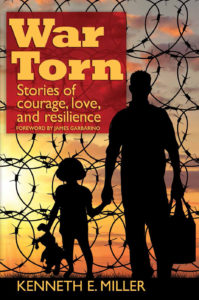
Excerpt from War Torn: Stories of Courage, Love, and Resilience


War Torn by Kenneth E. Miller


War Torn: Stories of Courage, Love, and Resilience by Kenneth E. Miller

Publisher:  Larson Publications (October 17, 2016) Category: Non-Fiction, PTSD, Current Events/World Affairs, Political Science: Genocide and War Crimes Tour Date: Oct and Nov, 2016 ISBN: 978-1936012787 Available in: Print,  296 Pages War Torn With some 200 million people in more than forty countries affected by armed conflict or genocide, refugees are appearing in record numbers. War Torn is timely in how it brings us intimately into the lives of civilians who have survived wars in Afghanistan, Iraq, Bosnia, Guatemala, and Sri Lanka. Alongside stories that convey intimately the destruction and heartbreak of armed conflict, Miller captures the courage and resilience he calls “a remarkable kind of light,” an essential counterpoint to the grief and trauma that war creates. The stories in War Torn are powerful, heart-wrenching, and unforgettable.

Advance Praise for War Torn by Kenneth E. Miller

"This is an eye-opening study. Psychologist Kenneth E. Miller and his wife Debbie began collecting data and teaching volunteers in refugee camps around the world back in 1991. In reality, there are almost 200 million people in over 40 countries impacted by war and genocide, living day to day exiled from their homes, families, and lifestyles. Kenneth Miller brings us their stories. This is a book I will read again, and share with my children. This is a worldwide problem we all need to understand, and address."- Bonnye Reed, GoodReads Reviewer “You could find no better guide than Ken Miller to illuminate this dark territory. A skilled story teller, he has an eye for nuance that is often missing in our cultural conversation about PTSD. I put down this book with a heart that was broken but also filled with hope. “-Ethan Watters, Author of Crazy Like Us and Co-founder of the San Francisco Writers' Grotto. “War Torn is an exceptional, gripping account of the impact of war—a must-read for anyone interested in how war profoundly touches and shapes people. Ken Miller merges the expressive writing of a novelist with compassion and the profound understanding of a seasoned mental health professional. This collection of personal experiences and mosaic of situations provides rich and unique insights into the complexities of war torn countries.”-Dr. Mark Jordans, King’s College London "Ken Miller weaves together for us tragic stories of war, loss and injustice with tales of friendship, family, and laughter. Ken's gift is the way he listens, which takes him and his readers beyond simple categories of war victim or trauma to the complex experiences people have in settings torn apart by violence. I'm grateful for the way he has captured the simultaneously disabling and inspiring coexistence of darkness and light in these places." -Jeannie Annan, PhD, Director of Research, Evaluation, and Learning at the International Rescue Committee

War Torn by Kenneth E. MillerAbout Kenneth E. Miller

An international expert on the impact of armed conflict on civilians, psychologist Kenneth E. Miller has been working with war-affected communities since 1991 as a researcher, clinician, organizational consultant, and filmmaker. A professor of clinical and community psychology for much of his career (San Francisco State University, Pomona College), in 2015 he joined the Dutch NGO War Child Holland and is currently based in Amsterdam. Blog: https://drkenmiller.wordpress.com/ Website: www.kennethemiller.com Twitter: @kennethemiller LinkedIn: www.linkedin.com/in/kennethemiller01

Pre-order War Torn by Kenneth E. Miller

Amazon Barnes&Noble IndieBound

EXCERPT:
FROZEN GRIEF  
My colleague Martín was intense and animated. He was a great storyteller, always pausing just long enough at key moments to build the suspense, then finishing with an ending that left you laughing, or in tears, or simply bewildered by the crazy things that happened in this country.
He came in one morning, dressed in his usual jeans and button-down shirt, looking agitated. 
“Man,” he said, “you won’t believe this one, Ken.”
“Go on.” 
He'd just heard about a woman, I'll call her Maria, maybe fifty years old, a Mayan Indian who lived in a small village near Lake Atitlan. The deepest lake in Central America, Atitlan is ringed by steep mountains that were thought to be home to armed guerillas during the war. That made the villages surrounding the lake hot targets for the army, whose strategy was to terrorize the villagers into submission and destroy any real or potential support they might be inclined to offer the guerrillas. 
Maria’s teenage son had disappeared during the height of the army's scorched earth campaign. Soldiers took him away at gunpoint one night, along with several other young men from the community. Neither he nor any of the others abducted that night were ever seen or heard from again. 
"That was ten years ago," Martín said.  
He paused for a moment, collecting his thoughts, and then said, “The thing is, every week she cleans his room. Dusts it, wipes it down, sweeps it, keeps everything just as it was the day he was taken away. Just in case, you know, he comes back.
"Ten years, man,” he continued. “And she's still waiting for him to come home."
"That's a long time," I said. "No way that kid’s still alive."
"Right. No way." Martín paused a moment. 
"Imagine that," he said. "Ten years and she's still waiting." 
I saw the sadness in his face. We both knew what Maria couldn't bear to admit: her son was never coming back. He’d probably been dead for most of the past decade.
It’s a familiar story, lived out by thousands of families. People didn’t just disappear in Guatemala, they got disappeared. It’s something you did to someone, a transitive verb. El fue desaparecido, someone might say, “He was disappeared.” There’s no corresponding verb for reappearing, because people rarely reappeared. Sure, sometimes the disappeared did show up again, usually as a corpse on the side of a road, bearing signs of torture. But there was no need to invent a word for that. 
Mostly, though, the disappeared remained that way. 
That left families in a terrible state. What Maria was going through, cleaning her son’s room, holding on to hope despite the almost certain reality that he was no longer alive—it's a familiar syndrome in Latin America. Argentines lived through it so often that psychoanalyst Maria Langer coined the term “frozen grief” to describe the syndrome she saw among families of the disappeared.[1] It’s the painful uncertainty of not knowing a loved one’s fate, the anguish and guilt if they give up hope and finally let go. It can feel like an abandonment. You don't want to imagine your child or parent or cousin being tortured in some dark and lonely prison cell, but you also can't let go of the possibility that they might still be alive, and could somehow find their way home. 
So people hold on, in a perpetual state of hope, even as they know, somewhere just below consciousness, that they're holding on to an illusion. As a result, they never really grieve. Healing gets put on hold indefinitely. A body would provide closure, however painful it might be. Whatever signs of violence it might bear, a corpse would end the uncertainty and help people move on with their lives. But it doesn't happen that way with disappearances; that's their particularly cruel legacy. You don't get to know. 
Martín had heard stories like this before, hundreds of them. He lived through the worst years of the war, never left the country like a lot of his peers did. Just kept his head down at the university where he was finishing his degree, and hoped he wouldn't get targeted by the army like so many of his classmates and professors. He knew the stories, but for whatever reason, Maria's experience, the way she still cleaned her son's room in anticipation of his possible return, really got to him. 
"He's never coming back, you know," Martín said.
"Right. I know. He's not. There's no way."
"And she can't see that," he continued. "Can't allow herself to see that."  He shook his head, as if trying to clear the story from his mind, then poured himself some coffee and sat down at his desk. 
Morning in Guatemala.


[1] Marie Langer, From Vienna to Managua: Journey of a Psychoanalyst. (London: Free Association, 1989).